Ultherapy Price per Line in Korea Explained

Ultherapy is one of the most requested lifting treatments in Korea, and almost every clinic prices it the same way: by the number of lines (shots) delivered. If you are comparing quotes before a trip to Seoul, understanding what a “line” is — and how many you actually need — is the key to reading those quotes correctly.
What is a “line” in Ultherapy?
Ultherapy uses micro-focused ultrasound with real-time imaging. Each time the transducer fires, it places a row of tiny heat points at a set depth under the skin. That single row is counted as one line. The device records every line, so the total is easy to verify on the screen after treatment.
Lines are delivered with different transducers, each reaching a different depth:
- 4.5 mm — the SMAS layer, the deep support layer that surgeons tighten in a facelift
- 3.0 mm — the deep dermis, for firmness and skin quality
- 1.5 mm — the superficial dermis, often used around the eyes and for fine texture
How many lines do different areas need?
Line counts depend on face size, skin thickness and how much laxity you have. The ranges below are common starting points used by many clinics in Korea:
| Area | Typical line range |
|---|---|
| Brow / forehead | Around 50–100 lines |
| Around the eyes | Around 50–100 lines (1.5 mm) |
| Lower face & jawline | Around 150–300 lines |
| Under the chin & neck | Around 100–200 lines |
| Full face | Around 300–600 lines |
A doctor should examine your face before confirming a number. More lines are not automatically better; the goal is enough energy at the right depth for your level of sagging.
Why prices per line vary between clinics
Two clinics can quote very different totals for the “same” Ultherapy. The main reasons are:
- Genuine device and cartridges — authentic Ultherapy (including the newer Ultherapy Prime) costs more than other HIFU devices.
- Who performs it — some clinics have the doctor perform every line; others delegate.
- Transducer mix — plans with more 4.5 mm lines for deep lifting are priced differently from mostly superficial plans.
- Numbing and comfort options — numbing cream, painkillers or sedation may be extra.
- Event pricing — limited-time promotions can lower the price per line considerably.
Ultherapy vs other HIFU devices
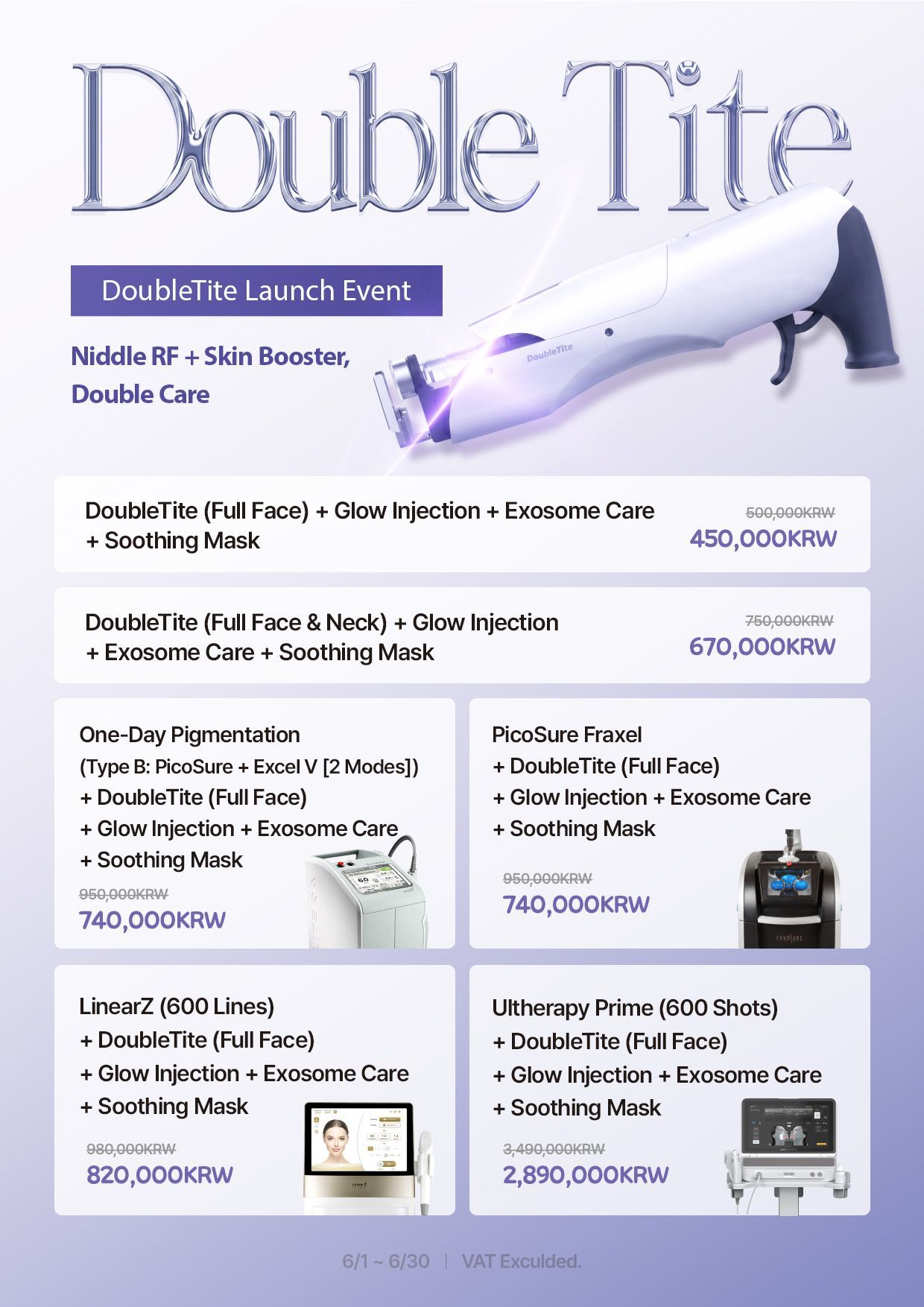
Many Korean clinics also offer other HIFU devices such as Shurink or Doublo. These are usually charged per “shot” as well, but a shot on another device is not equivalent to an Ultherapy line in energy, depth control or imaging. When comparing prices, always confirm which device is being used.
How to compare quotes fairly
- Ask for the device name and whether it is genuine Ultherapy.
- Ask for the total number of lines per depth(4.5 / 3.0 / 1.5 mm).
- Ask who performs the treatment.
- Ask whether numbing, aftercare and VAT are included.
- Ask to see the line counter on the screen after your session.
Frequently asked questions
How many lines do I need for a visible lift?
Most people with mild to moderate sagging see a natural lift with a full-face plan of a few hundred lines. Your doctor will adjust this to your face.
Is more lines always better?
No. Too many lines in one area adds discomfort without extra benefit. Correct depth and placement matter more than the total.
How long do results last?
Results build over two to three months and typically last about a year, which is why many people repeat Ultherapy annually.
Can I fly home after Ultherapy?
Yes. There is no downtime, so it fits easily into a short trip to Korea.
Prices and line counts vary by clinic and change often. Always confirm details directly with the clinic and have a doctor assess your skin before treatment.